
Update
PEN-Plus contributes to the attainment of SDG target 3.4 on reducing premature mortality from NCDs by strengthening the implementation of an integrated care delivery strategy among Africa’s poorest children and young adults through increased access to quality diagnosis, treatment and care in rural and periurban populations.
The aim of PEN-Plus is to provide essential NCD services to alleviate the burden of unaddressed, severe NCDs among underserved populations in the African Region through decentralized outpatient services and integrated case management. Implementation is guided by six key areas, each with its own corresponding target for 2030:
- develop normative standards, guidelines and recommendations;
- expand PEN-Plus implementation;
- strengthen leadership and governance;
- improve service delivery;
- train the health workforce;
- increase access to essential medicines;
- reinforce health information systems.
In 2024, the WHO Regional Office for Africa worked with Member States to expand PEN-Plus implementation and strengthen leadership and governance to support its successful roll-out. A brief overview of key achievements on these two areas is provided below.
Develop normative standards, guidelines and recommendations
In 2022, all 47 Member States of the WHO African Region endorsed the PEN-Plus model as their official strategy for caring for individuals with severe NCDs. The first key area of the PEN-Plus strategy focuses on developing normative standards, guidelines and recommendations to ensure consistent, evidence-based management of severe noncommunicable diseases across the African Region. This involves creating standardized protocols for screening, diagnosis, treatment and follow-up care at decentralized health facilities. By harmonizing practices, these guidelines aim to reduce variations in care, improve health outcomes, and provide clear direction for health care providers managing severe NCDs.
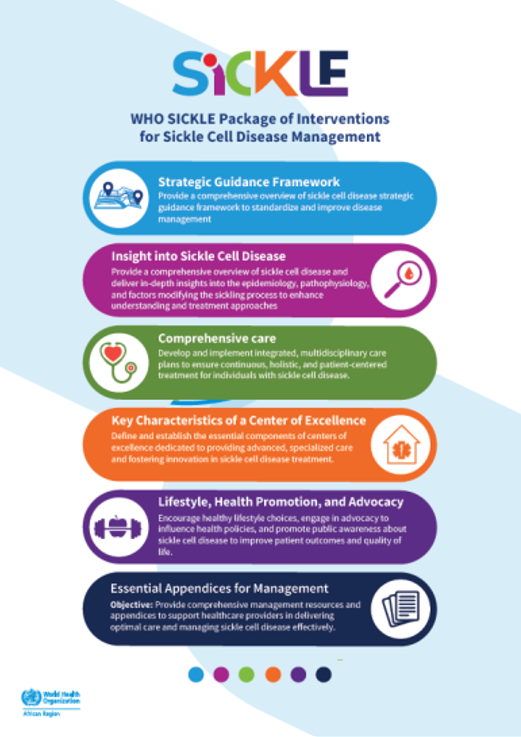
Key progress in this area includes the development of the Regional guide for sickle-cell disease management (WHO SICKLE Package) and the WHO Global guideline for rheumatic heart disease (RHD). Additionally, a regional situation analysis of national capacities to manage RHD has been completed to inform targeted interventions. Meanwhile, a number of key documents are in progress, such as the PEN-Plus operational guide; Type 1 diabetes guidelines; and SCD guidelines, all expected to be finalized by June 2025. These resources are integral to supporting countries in delivering high-quality, standardized care for severe NCDs and meeting the 2030 targets.
Expand PEN-Plus implementation
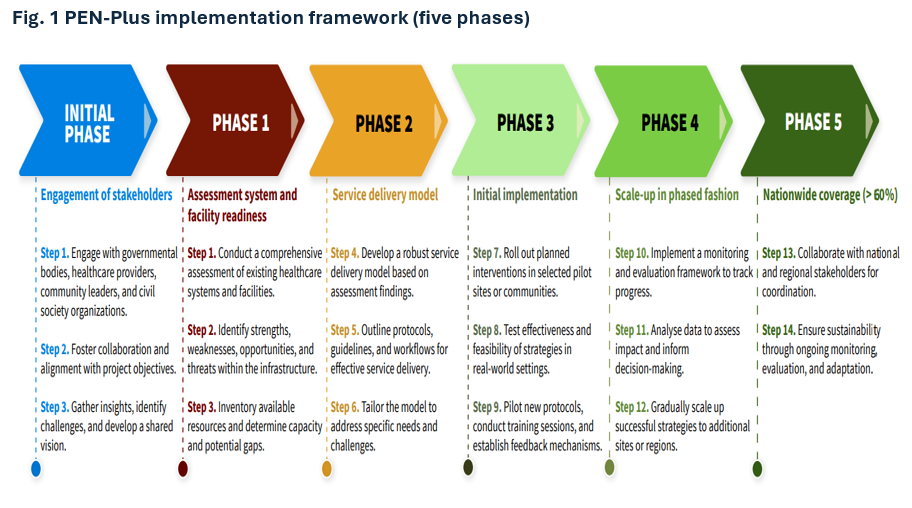
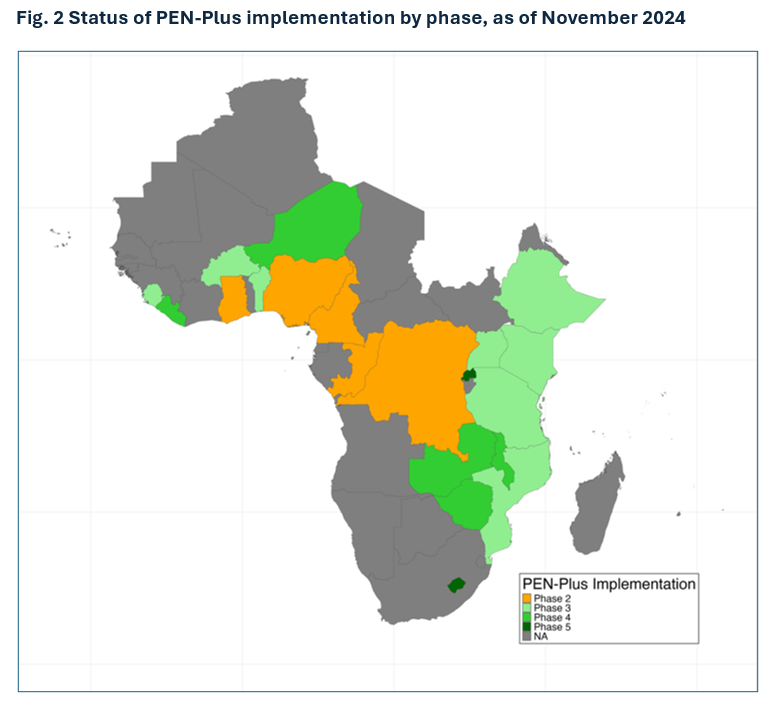
As of January 2025, twenty countries had initiated PEN-Plus, with 15 actively implementing the model (see Figs. 1–2). All 20 first-wave countries have conducted a baseline assessment and achieved Phase 1 of the Implementation Framework. Nine African nations – Ethiopia, Kenya, Liberia, Mozambique, Sierra Leone, Uganda, United Republic of Tanzania, Zambia and Zimbabwe – have initiated PEN-Plus implementation by establishing their first clinics and training sites. An additional six countries – Benin, Burkina Faso, Cameroon, the Democratic Republic of the Congo, Ghana, and Nigeria – have launched the initiation process for PEN-Plus. Most significantly, more than 11 000 people with severe, chronic NCDs across the Region now receive treatment in PEN-Plus clinics.[i]
Rwanda has been a front runner in the roll out of PEN-Plus, having scaled up from just three rural hospitals to every district hospital in the country. Malawi’s national scale-up is well under way, with over 440 clinicians and nurses trained and six secondary-level health facilities providing PEN-Plus care to over 300 patients living with severe NCDs.[ii] In collaboration with WHO and partners, the Malawian Ministry of Health has successfully piloted the model in Neno, one of the poorest regions of Malawi. Over the next five years, the Ministry aims to scale up the PEN-Plus initiative to incorporate 26 district and community hospitals across three regions of the country.
Strengthen leadership and governance
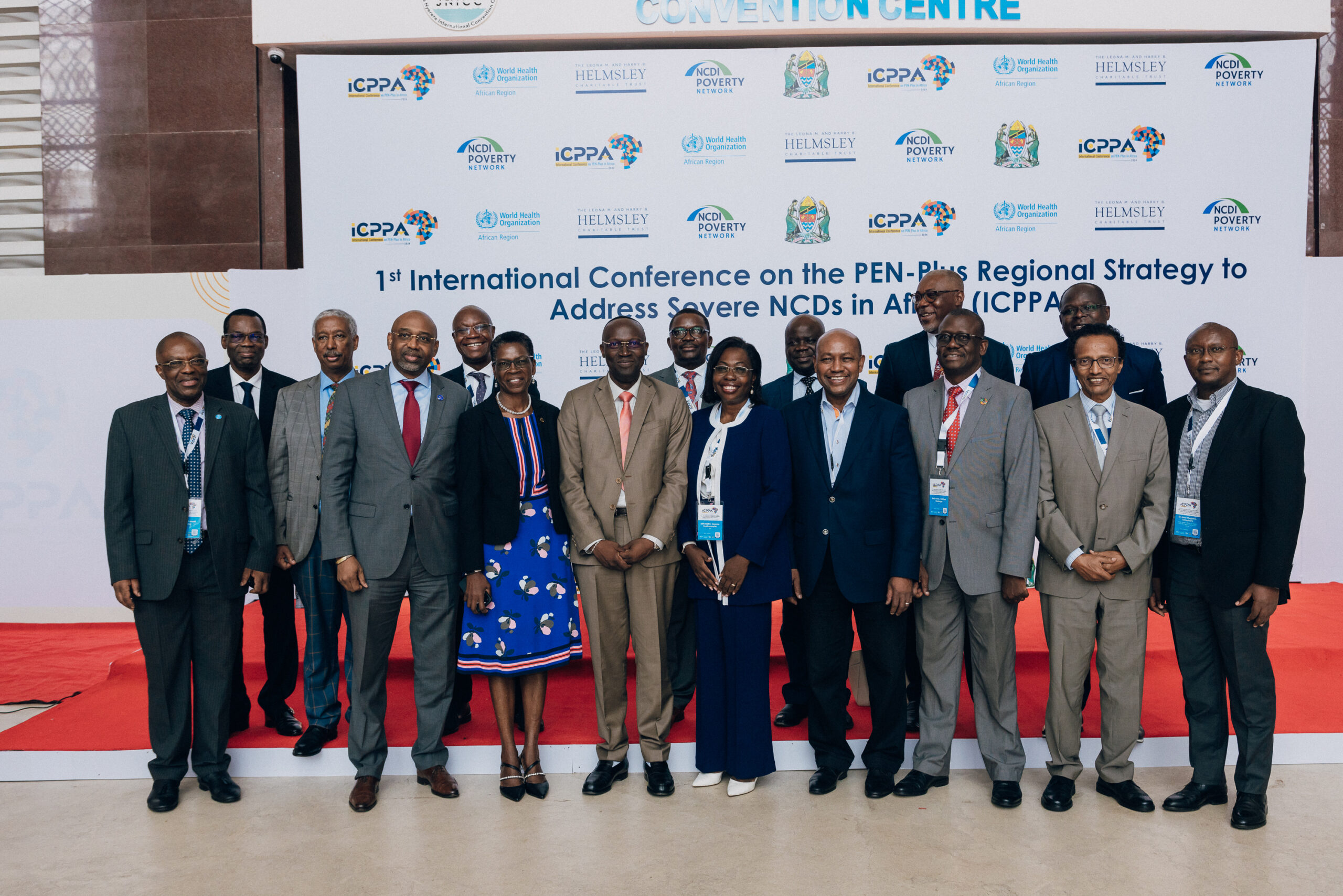
Guided by the PEN-Plus Communication Plan developed by the WHO Regional Office for Africa, several high-level messaging materials have been developed over the past two years, including a recent news article on boosting efforts to transform care for severe NCDs in Africa and multiple products to promote the first International Conference on PEN-Plus in Africa (see Box 2). Concurrently, baseline assessments have been conducted in all implementing countries, with reports under development. These reports will guide evidence-based decision-making around PEN-Plus in each country, ensuring the model is implemented efficiently and tailored to local needs.
Key tools and standards have also been developed to support PEN-Plus implementation, including:
WHO Operational PEN-Plus Handbook (in development)
There is ongoing consultation to review and finalize the PEN-Plus operational handbook, which provides essential guidance on implementing the PEN-Plus model across the African Region. Once completed, the handbook will play a key role in standardizing and improving the management of severe NCDs, particularly in underserved areas.
Regional Framework for the Implementation of the Global Diabetes Compact in the WHO African Region (2024)
- Regional Framework for the Implementation of the Global Diabetes Compact in the WHO African Region (2024). This unanimously approved framework commits governments to act by strengthening leadership, boosting financing and integrating care through WHO PEN and PEN-Plus.
WHO SICKLE: Package for sickle Cell Disease (SCD) management (2024)
- WHO SICKLE: Package for sickle Cell Disease (SCD) management (2024). The SICKLE technical package provides a holistic and integrated approach to managing sickle-cell disease, ensuring access to necessary interventions, promoting education and advocacy, enhancing the quality of care, and empowering patients and communities. A key recommendation is the proposal that, ‘…SCD management in SSA [sub-Saharan Africa] be fully integrated into WHO PEN and PEN-Plus’.[i]
[i] Module 1: Strategic Guidance and Framework. In, WHO SICKLE Package of Interventions for Sickle Cell Disease Management.